
Yellow Dog Teeth: What You May Be Seeing and What to Do Next
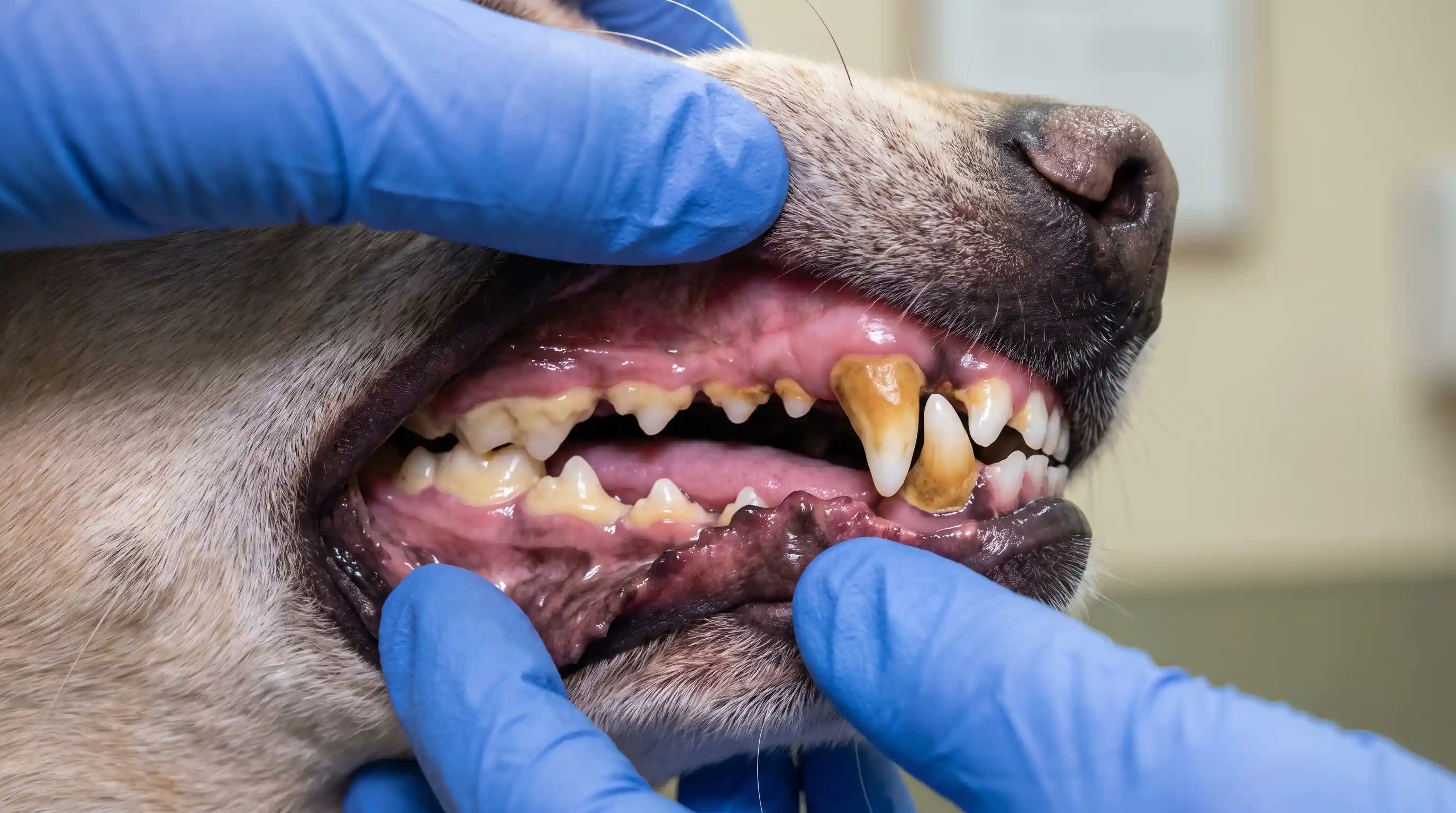
Yellow teeth can have different causes. A hard ridge near the gumline may be tartar, and it is safer to seek veterinary advice than try to scrape it away at home.
You gently lift your dog's lip, maybe to check a stray crumb, and notice it: yellow, tan, or brown areas along the gumline. A sudden observation can easily lead to a midnight internet deep dive filled with scary terms and unsafe DIY tools. Instead of panicking, it is helpful to pause, observe carefully, and know the difference between safe daily routines and when it's time to call the vet.

Important Safety Warning
Do not scrape. If you see a hard, yellow or brown ridge on your dog's teeth, do not attempt to pick, scrape, or remove it with tools at home. This can permanently damage their enamel, cause immense pain, and introduce dangerous bacteria into their bloodstream. Always leave tartar removal to veterinary professionals.
Why are my dog's teeth yellow?
If you are wondering, "why are my dog's teeth yellow?", you are certainly not alone. Yellow dog teeth typically stem from three main possibilities: simple food or chew staining, a buildup of sticky dog plaque, or hardened dog tartar (also known as calculus).
Plaque is a soft, sticky film that forms daily as bacteria interact with food particles and saliva. If left undisturbed by chewing or daily dental care routines, it hardens over a few days into tartar. Tartar has a rough, porous surface that is usually yellow or brown and stubbornly bonds to the tooth enamel.

Often, owners feel guilty when they notice yellowing, assuming they have somehow failed. The reality is that many dogs will simply not tolerate a toothbrush, and a daily oral hygiene routine needs to be realistic to be effective.
What yellow teeth can look like
While only a veterinary professional can diagnose the state of your dog's oral health, you can make careful, calm observations at home to pass on to your vet.
| Appearance | Possible Explanation | What Not to Assume | Sensible Next Step |
|---|---|---|---|
| Soft, sticky yellow film | Plaque buildup | Don't assume it can't be managed with daily care. | Establish a daily routine |
| Hard yellow/brown ridge near gums | Tartar (Calculus) | Don't assume you can scrape it off at home. | Book a veterinary check |
| Red, inflamed gums around yellow teeth | Gingivitis or dental disease | Don't assume it will resolve on its own. | Prompt veterinary visit |
Note: This table is for general observation, not diagnosis. Always defer to a veterinarian.
What you can safely do at home
If you're looking up how to clean yellow dog teeth or how to get rid of yellow dog teeth, you will likely encounter hundreds of "hacks" online. Most of them—like metal scrapers or acidic natural remedies—are actively harmful.
Instead of asking how to fix existing hard tartar, focus on building a safe, daily dental care routine. Your goal at home is to disrupt soft plaque before it hardens, and support overall oral hygiene.
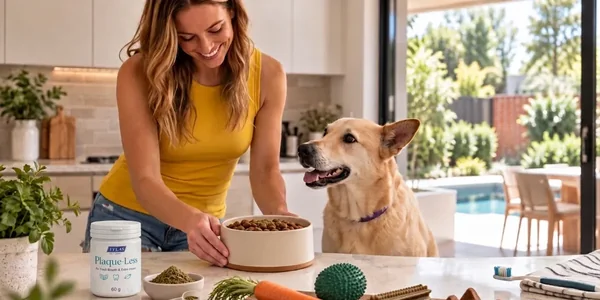
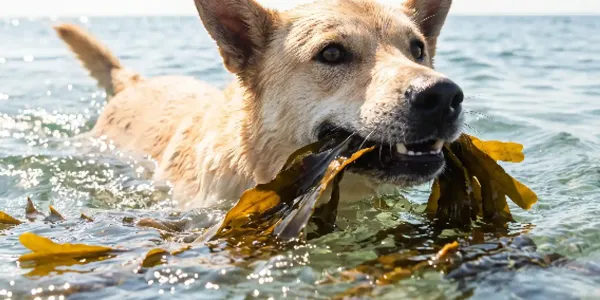
A daily food topper like Tylas Plaque-Less is designed to seamlessly support that goal. By simply adding a scoop to your dog's breakfast, you're introducing Ascophyllum nodosum sea kelp and organic parsley. This supports cleaner teeth, fresher breath (helping combat bad breath), and a healthier mouth environment—without the toothbrush wrestling match.
When to speak with a vet
Yellow is a useful sign to notice, not a home-repair project. It is always the right decision to consult a veterinarian if you see:
- A hard, unmoving ridge of yellow or brown material.
- Red, bleeding, or receding gums.
- Sudden changes in how your dog eats (e.g., dropping food or only chewing on one side).
- Swelling around the mouth or face.
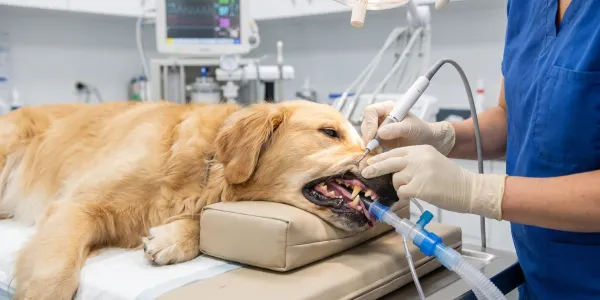
Veterinarians have the proper anesthetic protocols and ultrasonic tools to safely remove tartar above and below the gumline. Once they have returned your dog's teeth to a clean state, your job is to keep them clean safely at home.
Frequently Asked Questions
Why are my dog's teeth yellow?
Yellow dog teeth can be caused by food staining, soft plaque buildup, or hardened tartar (calculus). Only a vet can diagnose the exact cause.
Can I clean yellow dog teeth at home?
You can support oral hygiene with daily routines like food toppers, but you should never attempt to scrape hard tartar off yourself. Scraping can damage enamel and hurt your dog.
Is yellow build-up tartar?
It could be. Soft yellow buildup might be plaque, while hard, rough ridges along the gumline are typically tartar, which requires veterinary cleaning.
Can dental powder remove yellow tartar?
No. Dental powders like Tylas Plaque-Less support daily oral hygiene and help reduce soft plaque buildup, but they cannot remove existing hardened tartar.
Support Your Dog's Dental Routine
Build a safer daily habit. Try Plaque-Less to help reduce plaque and tartar build-up while keeping breath fresh with daily ocean kelp and parsley. Starting at $0.13/day.
Related Articles in Dog Dental Care
Dog Plaque vs Tartar
Learn the crucial differences between soft plaque and hardened tartar, and why knowing the difference matters.
Can You Remove Dog Tartar at Home?
Understand the risks of internet home-fixes and why scraping tartar at home is dangerous for your dog.
Dog Bad Breath Guide
Is your dog's bad breath making cuddles difficult? Learn common causes and when to see a vet.