How Does Plaque-Less Work? Ingredients, Research and Daily Use
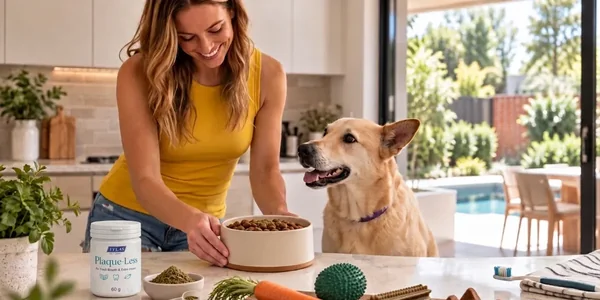
Plaque-Less goes in your dog's bowl once a day. Measure the recommended number of level scoops, then sprinkle the powder over wet food, raw food or moistened dry kibble.
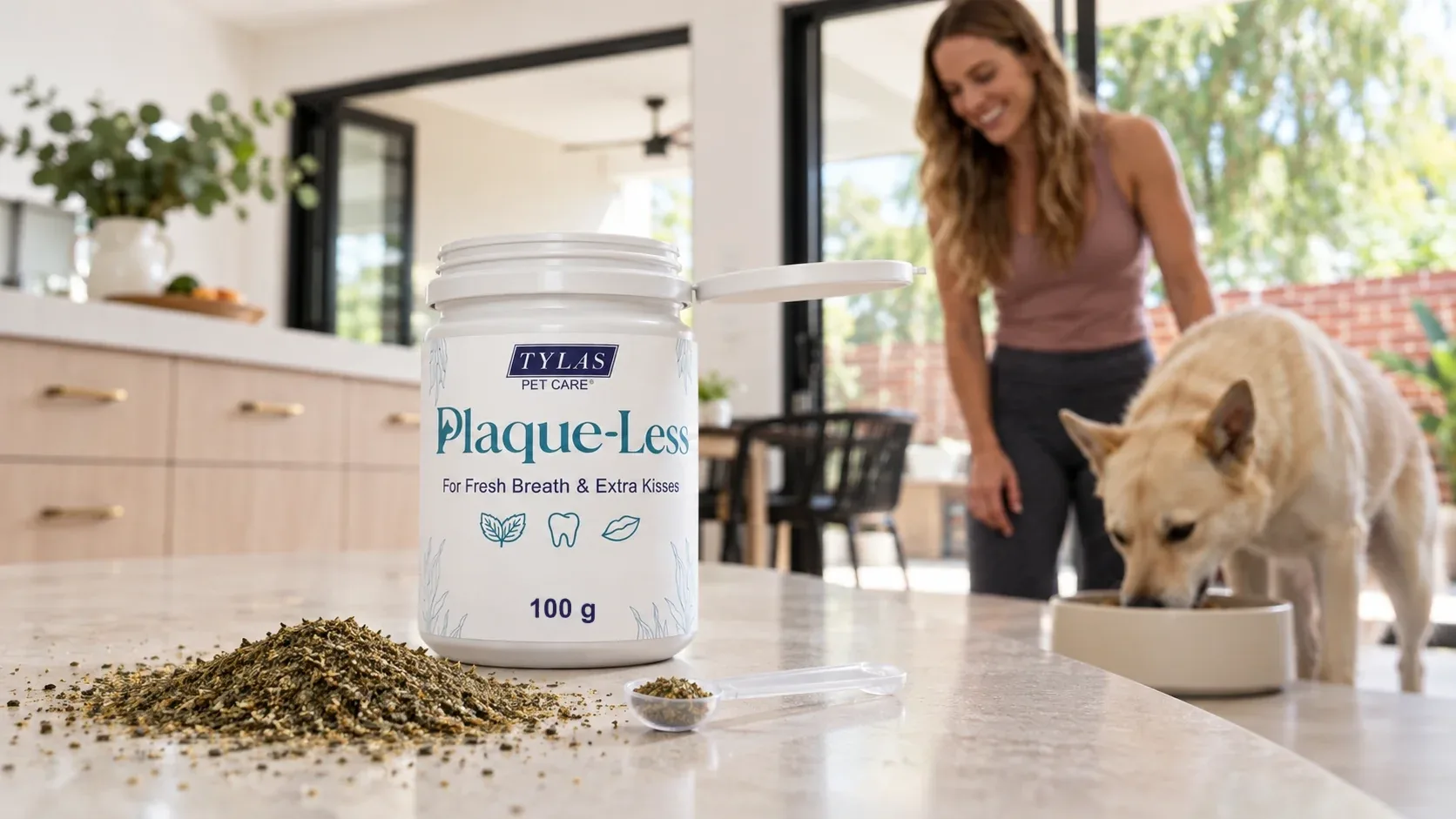
Plaque-Less is a daily dental powder for dogs. Its benefits are:
- Helps reduce and control plaque and tartar build-up.
- Helps freshen breath.
- Supports healthy teeth and gums.
No brushing required to use. Just sprinkle over food daily. That describes how to give the powder. It does not mean toothbrushing is unnecessary or that a powder can replace veterinary dental care.
If you are wondering how soon Ascophyllum nodosum starts working, there is no single proven date. The available Ascophyllum nodosum studies measured different outcomes at different assessment points from Day 30 to Day 90.
Those findings are useful context, but they are not a clinical timeline for Tylas Plaque-Less.

What is in Plaque-Less?
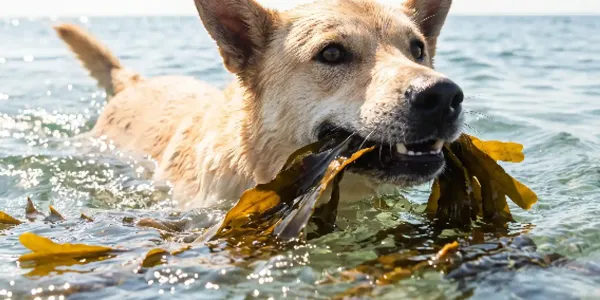
Made with organic Ascophyllum nodosum seaweed and organic parsley. For ingredient background, read what Ascophyllum nodosum is.
That is the complete ingredient list. The benefits above apply to Plaque-Less as a finished product, not to either ingredient on its own.
How long does Ascophyllum nodosum take to show a measurable difference?
The honest answer is that it depends on what is being measured. The available studies did not find one universal point when every outcome changed, and they did not test Tylas Plaque-Less.
| What was measured | Earliest supported result | What that result does not mean |
|---|---|---|
| Calculus accumulation | Day 30 in the 2018 edible-treat study | Day 30 was the first assessment after professional cleaning. This was not a test of removing existing tartar and it was not a Tylas result. |
| Volatile sulfur compounds | Day 60 in the 2018 study | These compounds are a breath-related proxy. The Day 30 difference was not statistically significant. |
| Plaque accumulation | Day 90 in the 2018 study | The paper did not report a significant difference at Days 30 or 60. Day 90 was the final assessment, not a proven peak. |
| Saliva metabolome | Day 30 in the 2021 powder study | Day 30 was the only post-baseline saliva sample. It does not establish when the difference began, a clinical onset or a proven mechanism. |
The 2018 double-blind, randomised, placebo-controlled trial followed 60 client-owned dogs for 90 days after professional dental cleaning. It tested cereal treats containing 25% A. nodosum, not powder.
The dogs came from five small or toy breeds, and researchers assessed them on Days 30, 60 and 90. If your dog has just had a clean, see our guide to caring for teeth after a professional vet clean.
The sequence matters. A calculus difference was detected at the first assessment on Day 30. The breath-related measure first differed on Day 60, while the plaque difference was first statistically significant on Day 90.
That does not support a blanket claim that the ingredient “works in 30 days”. It also does not support a two-to-four-week breath promise or the idea that Day 90 represents a maximum result. For more on dog bad breath and veterinary red flags, read our dedicated guide.
The 2021 double-blind, randomised, placebo-controlled study also involved 60 client-owned dogs after professional cleaning. This time, the researchers tested an A. nodosum powder against a cellulose placebo. They collected saliva at the start and again on Day 30 for metabolomic analysis, which looks at small molecules called metabolites in a biological sample.
The researchers observed differences in the dogs' saliva metabolite profiles at Day 30. Because there was no earlier post-baseline sample, the study could not show exactly when those differences began. It also did not establish that a saliva change was the point when an owner would notice a dental or breath result.
Manufacturer Funding Disclosures
These were manufacturer-funded studies. The 2018 paper says SwedenCare financed the study design and budget. The 2021 study was sponsored by Swedencare, which covered the study and publication costs, and one author disclosed a consulting and company leadership role.
The paper states that the funder was not involved in the study design, data work, interpretation, writing or submission. The results are still worth reading, but the funding and product-specific scope belong beside them.
What do researchers know about how it works?
Not enough to describe a proven step-by-step mechanism.
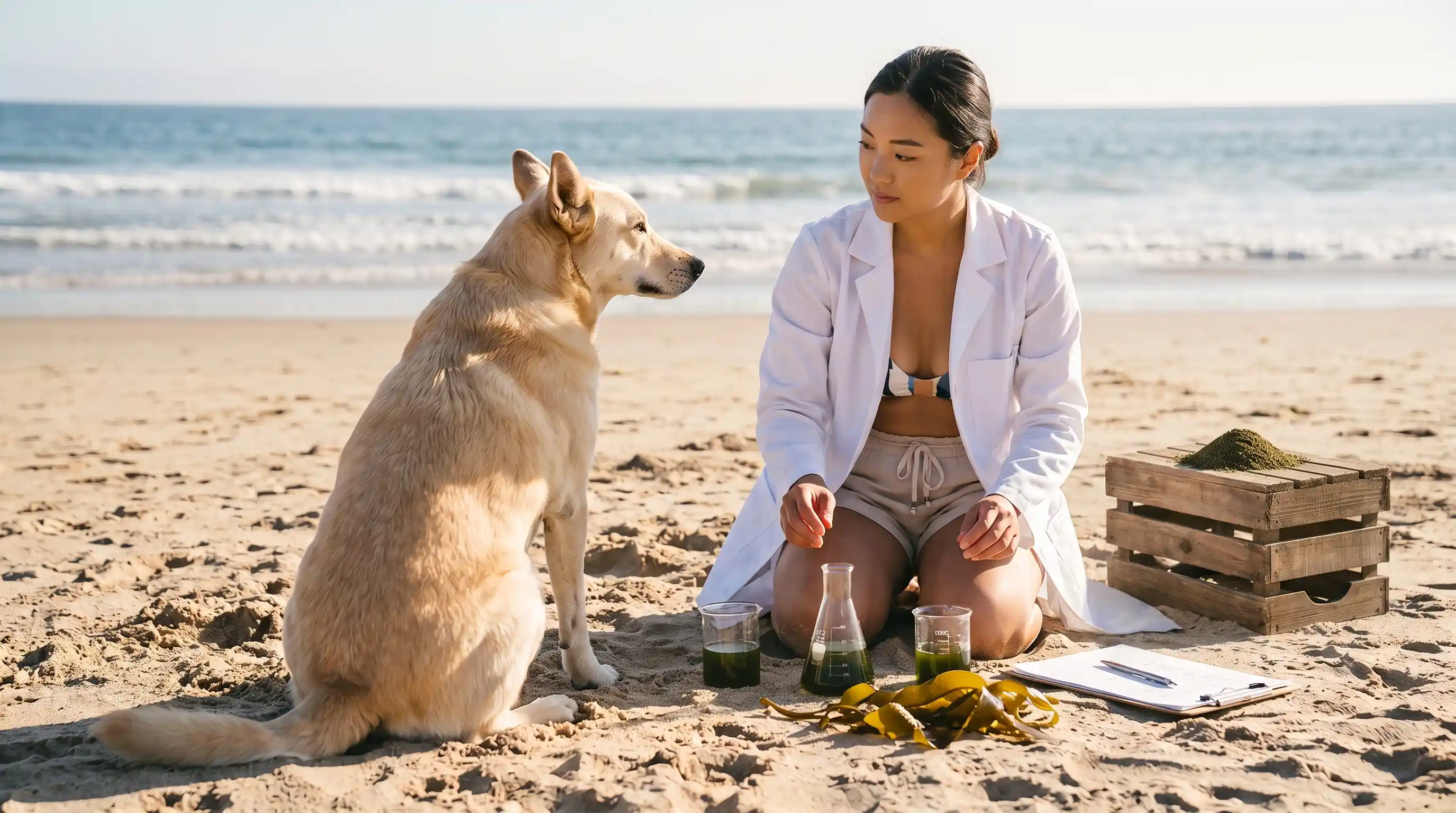
The 2021 study investigated a saliva-related hypothesis and observed metabolomic differences after 30 days. Its authors discussed the possibility that compounds from A. nodosum might be absorbed through the intestine and later secreted in saliva.
They did not establish that pathway, and they concluded that the exact mechanism remained unclear.
That distinction rules out some neat-sounding explanations. The evidence does not establish that the powder works “from the inside out”, travels through the bloodstream, coats the teeth, softens deposits or changes saliva in a proven way that stops bacteria sticking. Those ideas should not be presented as settled facts.
What the studies do not prove about Tylas Plaque-Less
Neither study tested Tylas Plaque-Less. They did not test its parsley-containing formulation, its scoop or its five weight-based serving bands.
There are other limits worth keeping in view:
- The 2018 trial used edible treats. The 2021 trial used powder.
- Both trials began after professional dental cleaning. They studied what happened afterwards, not whether established hard tartar could be removed or softened.
- Both trials had Swedencare funding, and the 2021 paper included an author consulting disclosure.
- The Veterinary Oral Health Council accepted-products list includes the bite and powder formats discussed here. That acceptance belongs to the named products and formats. It does not transfer to A. nodosum generally or to Tylas Plaque-Less.
This does not make the studies irrelevant. It makes their use precise: they tell us what researchers observed with the preparations, dogs, methods and assessment points they actually studied. They do not establish a Tylas-specific result, percentage, onset or mechanism.
How to add Plaque-Less to your dog’s routine
A simple 10-second routine designed to fit seamlessly into dinner time.
Find correct dose
Use the calculator or label guide. Do not guess or copy other brands.
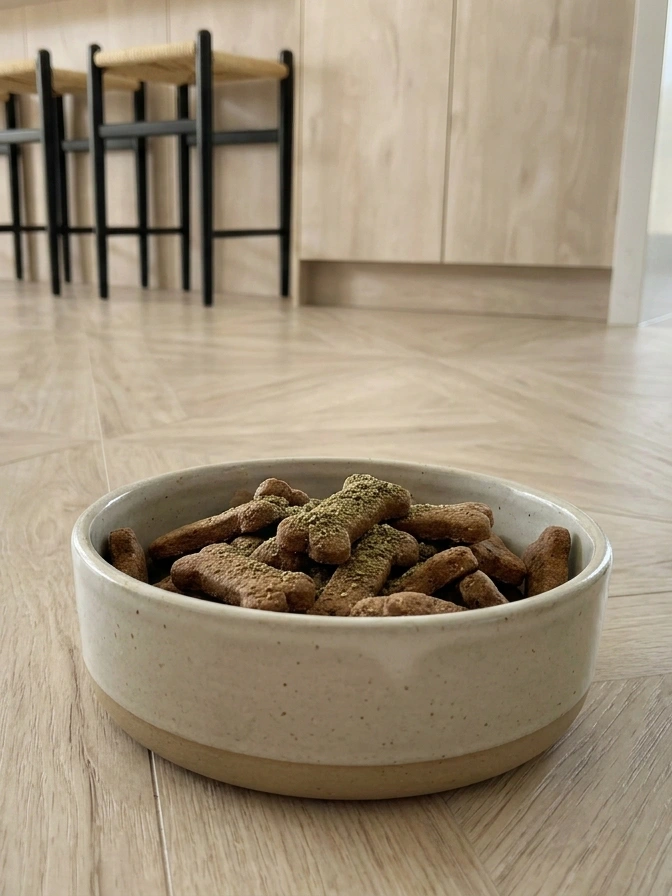
Add once daily
Sprinkle over wet or dry food, or mix directly into dinner.
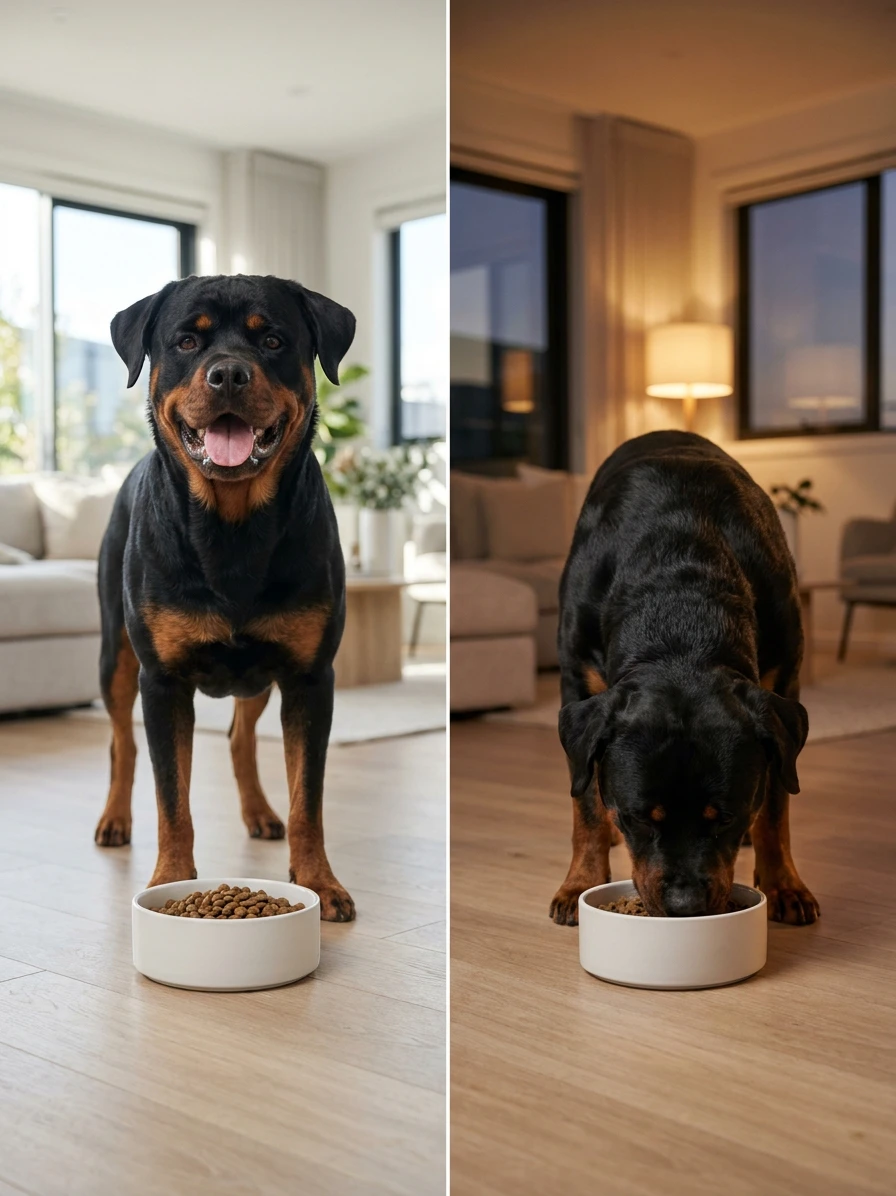
Keep it simple
Pick the meal you are least likely to forget. Low fuss is the point.
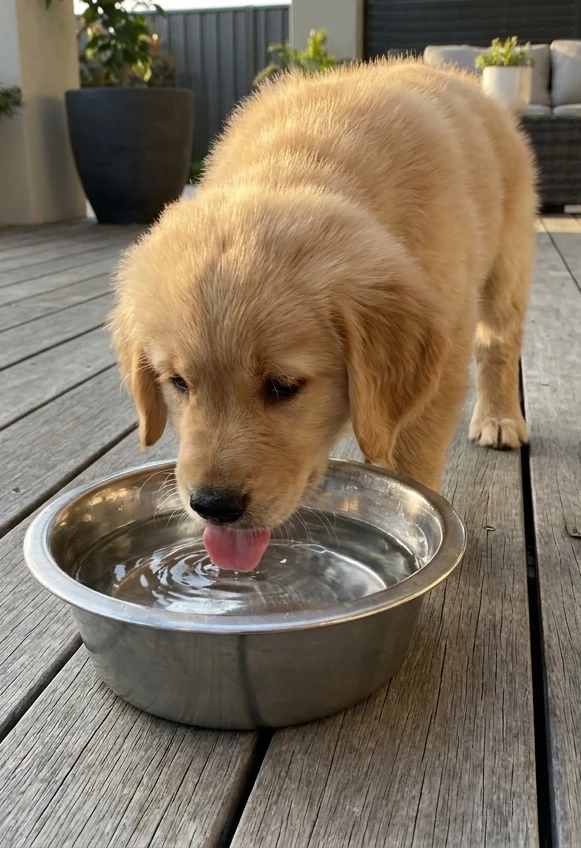
Fresh water
Ensure your dog always has access to clean, fresh drinking water.
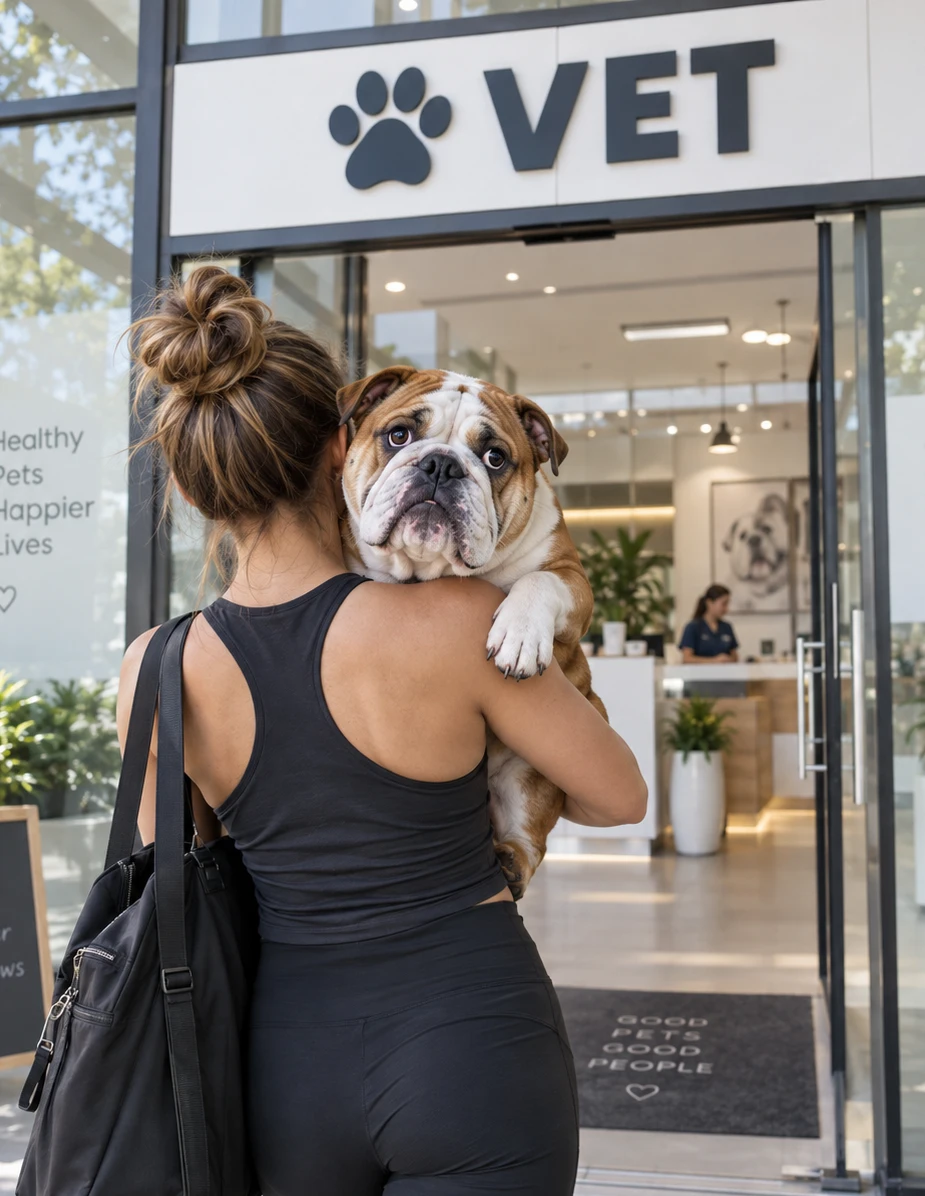
Normal care
Maintain vet checks and brushing when tolerated alongside Plaque-Less.
Official Plaque-Less dosage by dog weight
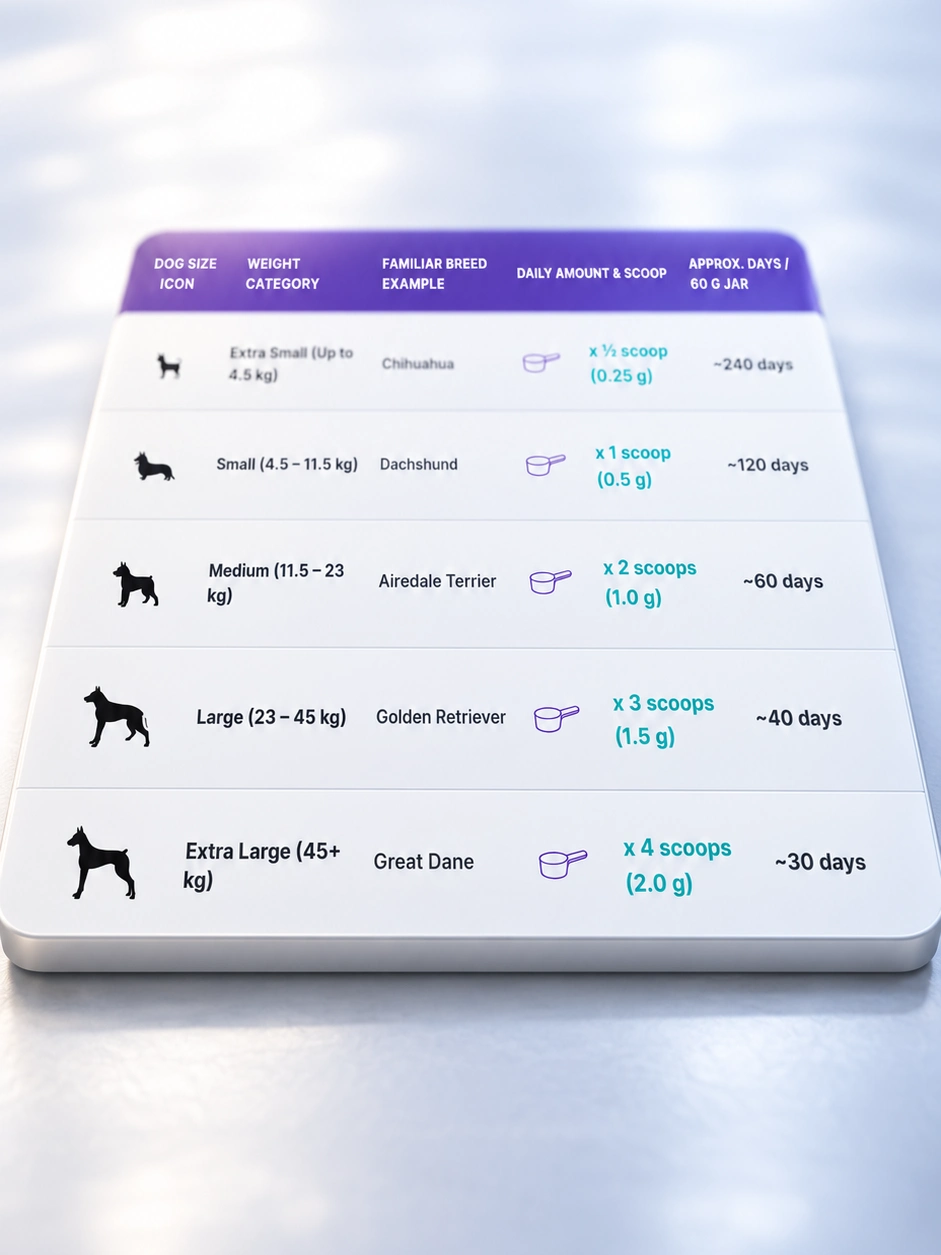
Use the Tylas level scoop and choose the serving for your dog's weight. Do not convert the serving into teaspoons, pinches, grams or another brand's scoop.
| Dog weight | Daily serving | Estimated days per 60 g jar |
|---|---|---|
| Up to 4.5 kg | ½ level scoop daily | 120 days |
| 4.5 to 11.5 kg | 1 level scoop daily | 60 days |
| 11.5 to 23 kg | 2 level scoops daily | 30 days |
| 23 to 45 kg | 3 level scoops daily | 20 days |
| Over 45 kg | 4 level scoops daily | 15 days |
For example, the official serving for a dog weighing up to 4.5 kg is ½ level scoop daily.
Check the Plaque-Less dosage guide before the first serving. Sprinkle the recommended amount over food once daily. Mix it into wet food, raw meals or moistened dry kibble.
When the limits matter
Sprinkling a daily dental powder over food and treating an existing dental problem are different jobs.
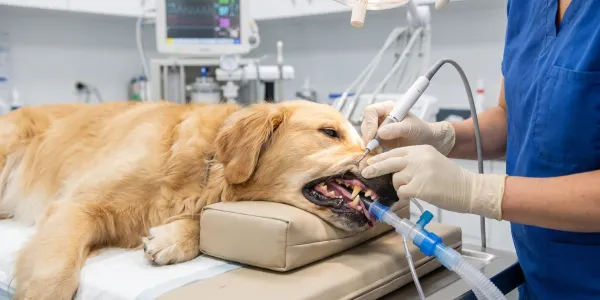
To understand the difference between plaque and tartar, it helps to know that hard calcified tartar and gum infections require professional veterinary examination and scaling under anaesthesia.
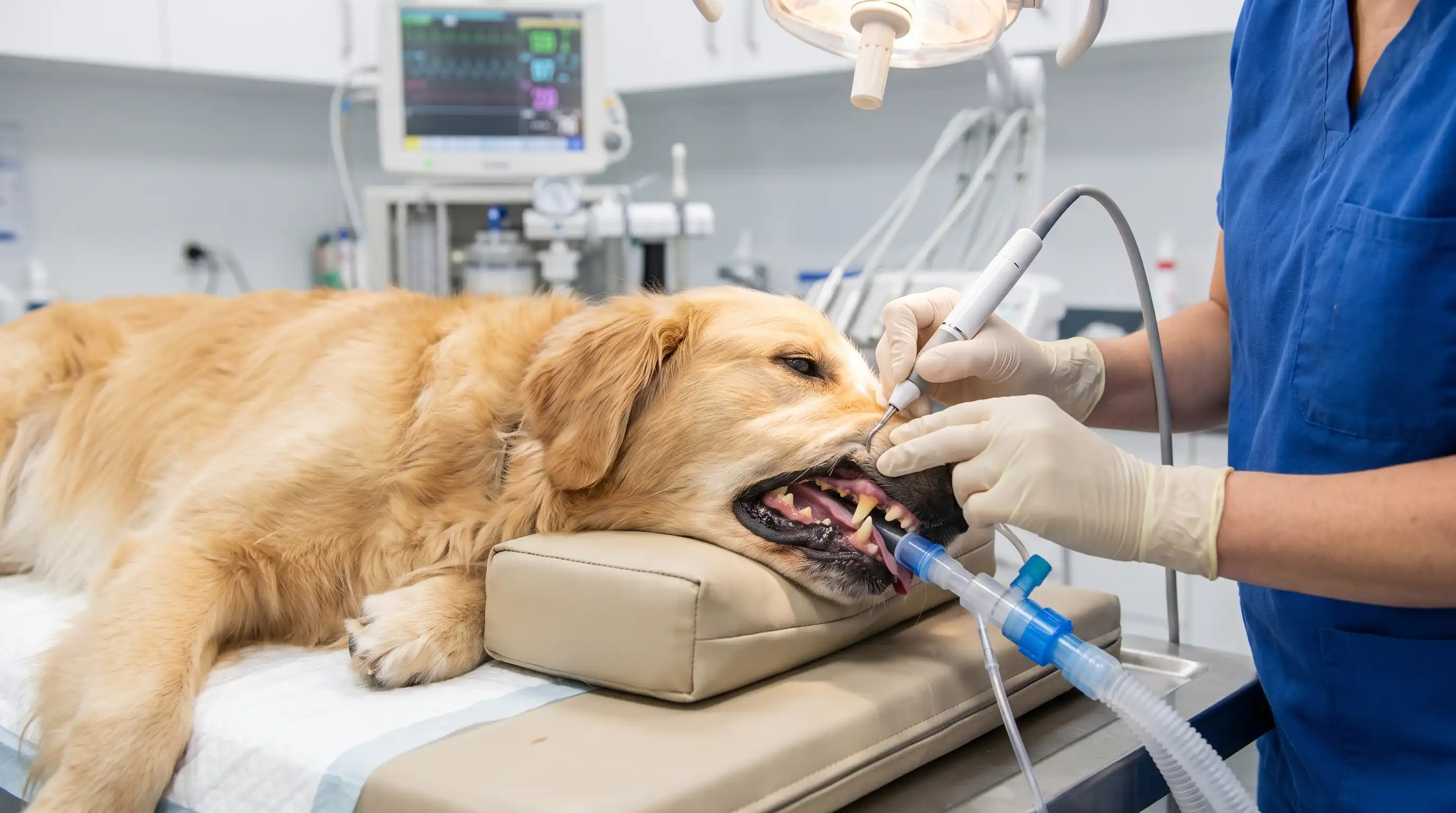
That boundary matters because both studies discussed above started after professional cleaning. They cannot tell us that A. nodosum removes hard tartar that is already there.
Thyroid conditions and thyroid medication
Owners of dogs with pre-existing thyroid conditions or taking thyroid medication should consult their veterinarian before introducing kelp dietary supplements.
For more detail, read the seaweed and iodine guide.
Quick questions
How soon should I expect a result?
There is no universal, clinically proven start date. Ascophyllum nodosum studies detected different measured outcomes at assessment points from Day 30 to Day 90, but that range is not a Tylas Plaque-Less timeline or a promise of what an individual owner will notice.
What is the Plaque-Less dose for a dog up to 4.5 kg?
½ level scoop daily.
Can I add Plaque-Less to dry food?
Yes. Mix it into moistened dry kibble. You can also add it to wet food or raw meals.
What if hard tartar is already there?
Hard calcified tartar and gum infections require professional veterinary examination and scaling under anaesthesia.
What if my dog has a thyroid condition or takes thyroid medication?
Consult your veterinarian before introducing kelp dietary supplements.
Before the first serving
Use the dosage guide to find your dog's weight band, then measure the correct level-scoop amount and add it to food once daily.
Study note
The trials discussed above used ProDen PlaqueOff products: cereal dental bites in 2018 and powder in 2021. Neither trial tested Tylas Plaque-Less.