
Dog Bad Breath: Causes, Daily Care & Vet Red Flags
Bad breath is funny until it starts changing cuddle time. You still love the face kisses—you just wish they came with less impact. You love your dog deeply, but couch cuddles are less cute when every yawn feels personal and you've perfected the art of breathing sideways during stomach rubs. Discover what causes dog halitosis, how daily food toppers restore fresh breath, and critical red flags that require a vet visit.

Direct Answer & Decision Fast
The short answer: Dog bad breath (halitosis) is primarily caused by anaerobic oral bacteria breaking down proteins in soft plaque biofilm, producing foul-smelling Volatile Sulfur Compounds (VSCs). Daily food toppers like Tylas Plaque-Less neutralize VSCs using organic parsley while organic Ascophyllum nodosum sea kelp alters salivary enzymes to prevent plaque accumulation. Sudden severe odors (ammonia or sweet smells) indicate systemic medical emergencies requiring immediate veterinary care.

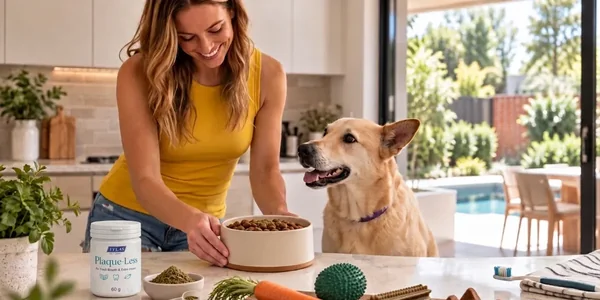
You don't want fewer kisses; you want better ones. That’s why Plaque-Less targets mouth freshness right at breakfast. One daily scoop of organic Ascophyllum nodosum seaweed and parsley helps reduce plaque and tartar build-up while keeping breath noticeably fresh—getting face kisses back on the approved list without a daily struggle.
Types of Dog Bad Breath: What Is Normal vs. Medical Danger
Not all bad breath comes from the mouth. Identifying the specific odor profile helps you distinguish routine oral plaque from urgent internal medical conditions:
| Odor Profile | Primary Cause | Management Strategy | Action Required |
|---|---|---|---|
| Mild Stale Breath | Daily soft plaque biofilm & food residue | Daily Plaque-Less food topper | Safe Home Maintenance |
| Foul / Fishy Odor | Gingivitis & early tartar accumulation | Daily hygiene + Vet oral evaluation | Vet Check Recommended |
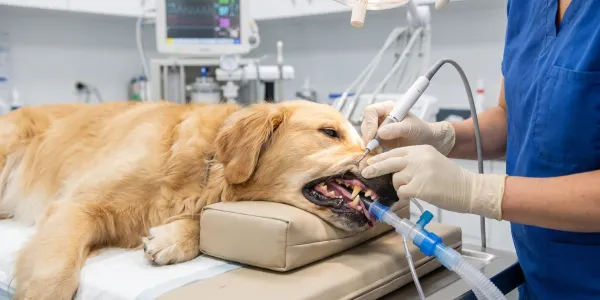
| Rotten / Putrid Odor | Periodontal disease & tooth root infection | Ultrasonic scaling & surgical extraction | Urgent Vet Consult |
| Ammonia / Urine Odor | Systemic kidney disease waste buildup | Full medical bloodwork panel | EMERGENCY Vet Visit |
| Sweet / Fruity Odor | Diabetic ketoacidosis | Urinalysis & blood glucose evaluation | EMERGENCY Vet Visit |
Why Tuesday Routines Fail (And How to Fix Them)
The problem is not caring; the problem is keeping a complicated routine going on a normal Tuesday. You tell yourself you'll brush tonight, but work, kids, dinner, and washing happen.
Plaque-Less removes the guilt and fits into the calendar invite your dog never misses: mealtime. Adding a daily food topper like Tylas Plaque-Less to your dog's breakfast combines 100% organic Ascophyllum nodosum and parsley to help control plaque, freshen breath, and support healthy teeth and gums—no brushing required.
The Science of Dual-Action Breath Freshness
Tylas Plaque-Less targets bad breath at two distinct physiological levels:
- Immediate Chlorophyll Binding (Parsley): Organic parsley contains concentrated natural chlorophyll. Chlorophyll binds directly to volatile sulfur compounds (VSCs) in the oral cavity and stomach, neutralizing odors at their source.
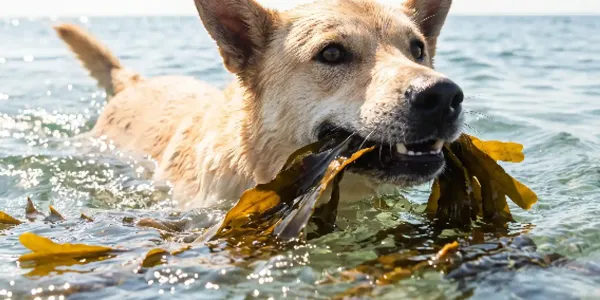
- Systemic Biofilm Alteration (Ascophyllum Nodosum): Bioactive kelp compounds alter salivary enzymes, preventing anaerobic plaque bacteria from colonising tooth enamel.
Frequently Asked Questions
How quickly will my dog's breath smell fresher?
Most owners report noticeably sweeter breath within 7 to 14 days thanks to organic parsley's chlorophyll binding, with long-term plaque reduction occurring over 30 to 60 days.
What should I do if my dog's breath suddenly smells like urine or acetone?
An ammonia/urine smell indicates potential kidney disease waste accumulation, while a sweet/fruity smell indicates potential diabetic ketoacidosis. Both are medical emergencies requiring immediate veterinary bloodwork.
Freshen Your Dog's Breath Naturally
Try Plaque-Less today to help reduce plaque and tartar build-up while keeping breath fresh with daily ocean kelp and parsley. Starting at $0.13/day.
Related Articles in Dog Dental Care
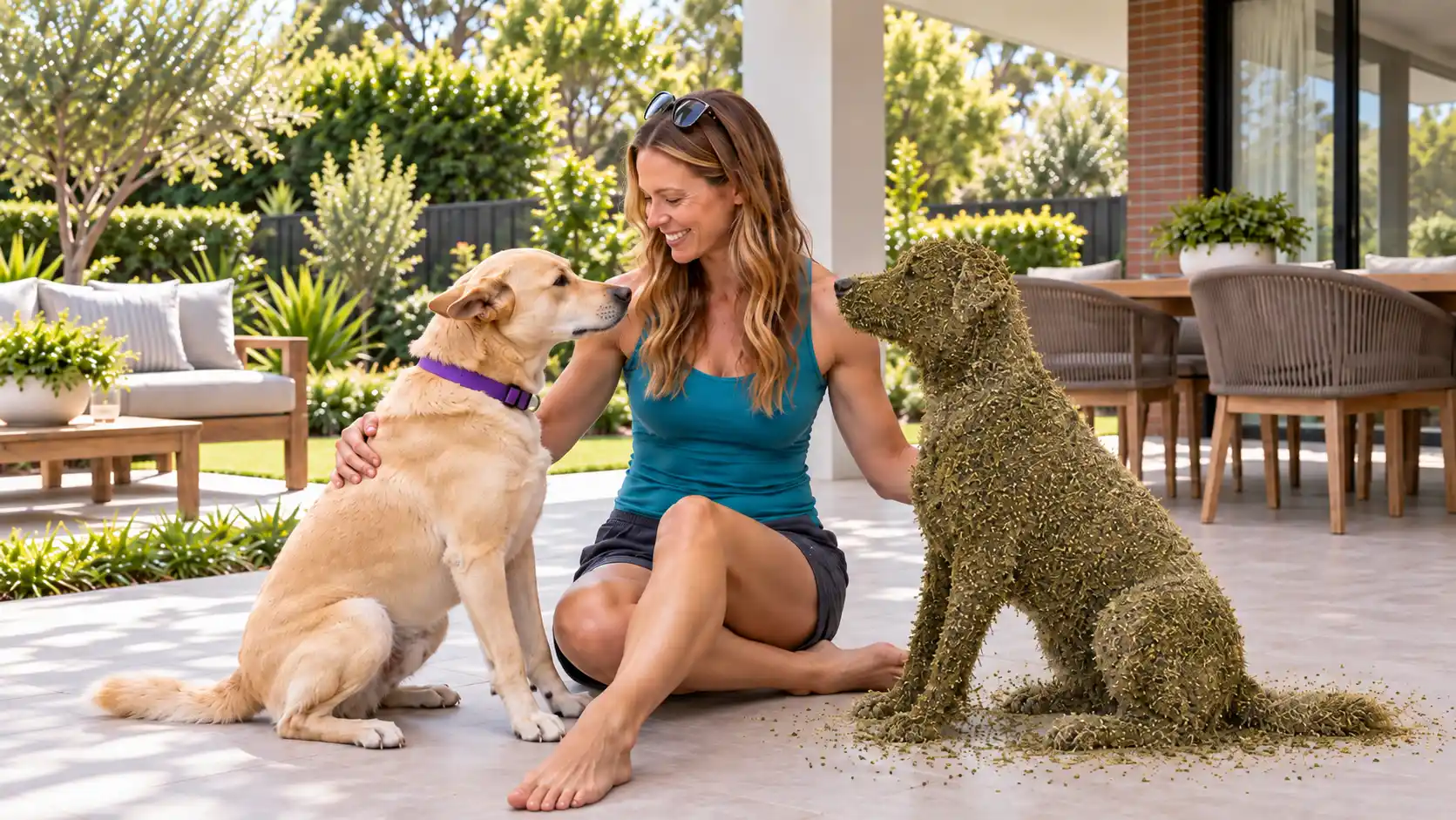
Dog Dental Powder Australia: Buyer Guide
Complete Australian buyer guide explaining daily serving sizes, ingredient safety, and building a low-friction routine.
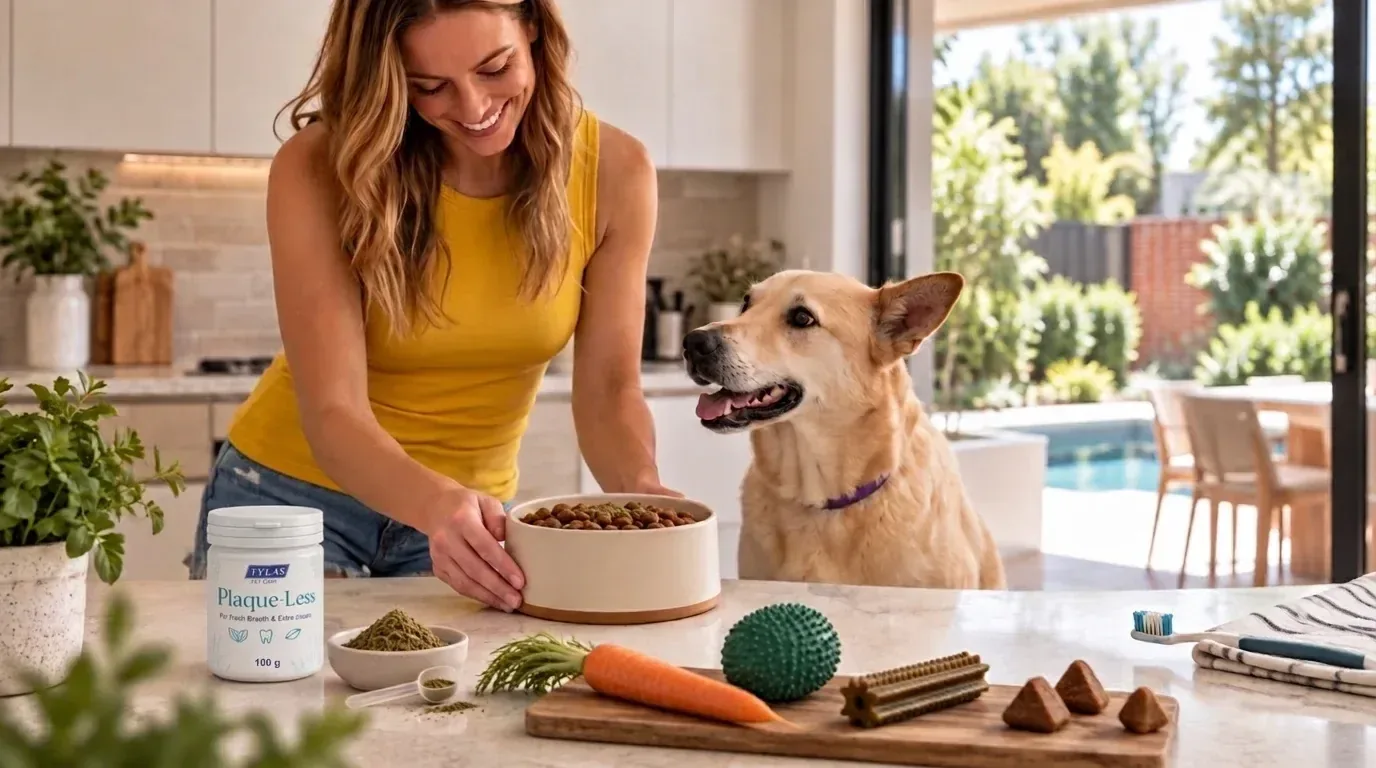
How to Clean Dog Teeth Without Brushing
Discover 5 simple, stress-free ways to keep your dog's teeth clean and breath fresh without toothbrushing.
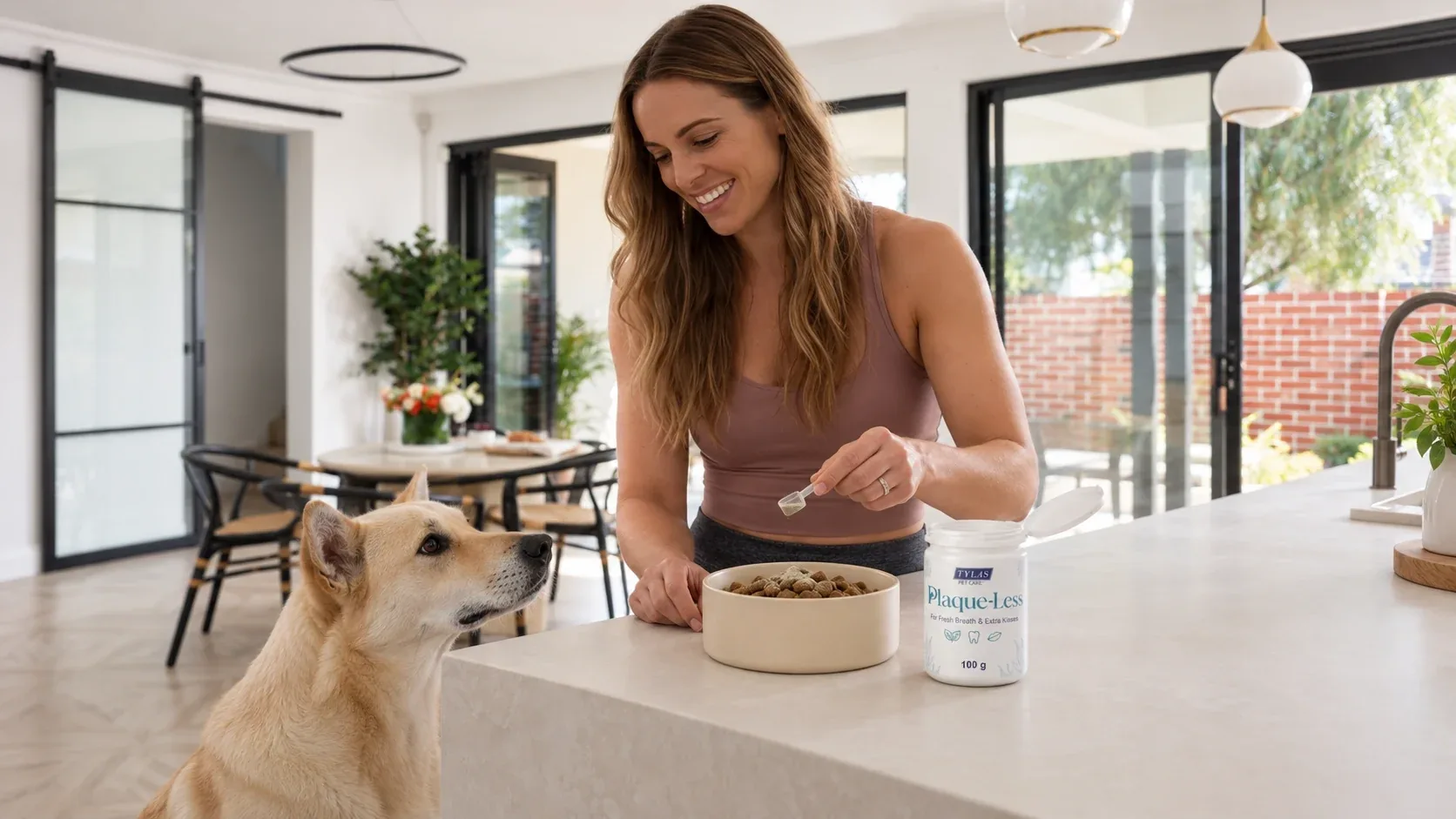
Small Dog Dental Care Routine
Why small dogs suffer from dental issues earlier and how daily food toppers support tiny teeth.