



Why Do Seaweed Dental Powders Warn About Thyroid Problems?
When pet parents read dog dental powder labels, a small-print warning often catches them off guard: "Not suitable for dogs with hyperthyroidism" or "Consult your veterinarian before use if your dog has a thyroid disorder." Does this mean seaweed is dangerous? Here is why iodine warnings exist on seaweed powders, the physiological difference between healthy and medically managed dogs, FEDIAF safety levels, and what responsible veterinary boundaries look like.
Direct Answer & Decision Fast
The short answer: Seaweed dental powders carry a thyroid warning because marine botanicals like Ascophyllum nodosum naturally contain iodine. The disclaimer is a cautious regulatory safeguard: while healthy dogs process measured dietary iodine safely, dogs with diagnosed thyroid disease or taking prescription levothyroxine require consistent dietary oversight by their veterinarian.
The Label Disclaimer That Causes Pet Owner Anxiety
When dog owners pick up a tub of seaweed-based dental powder, they are usually looking for a simple, natural routine to support cleaner teeth and fresher breath. But as they turn the label around, a sentence in small print often stops them in their tracks:
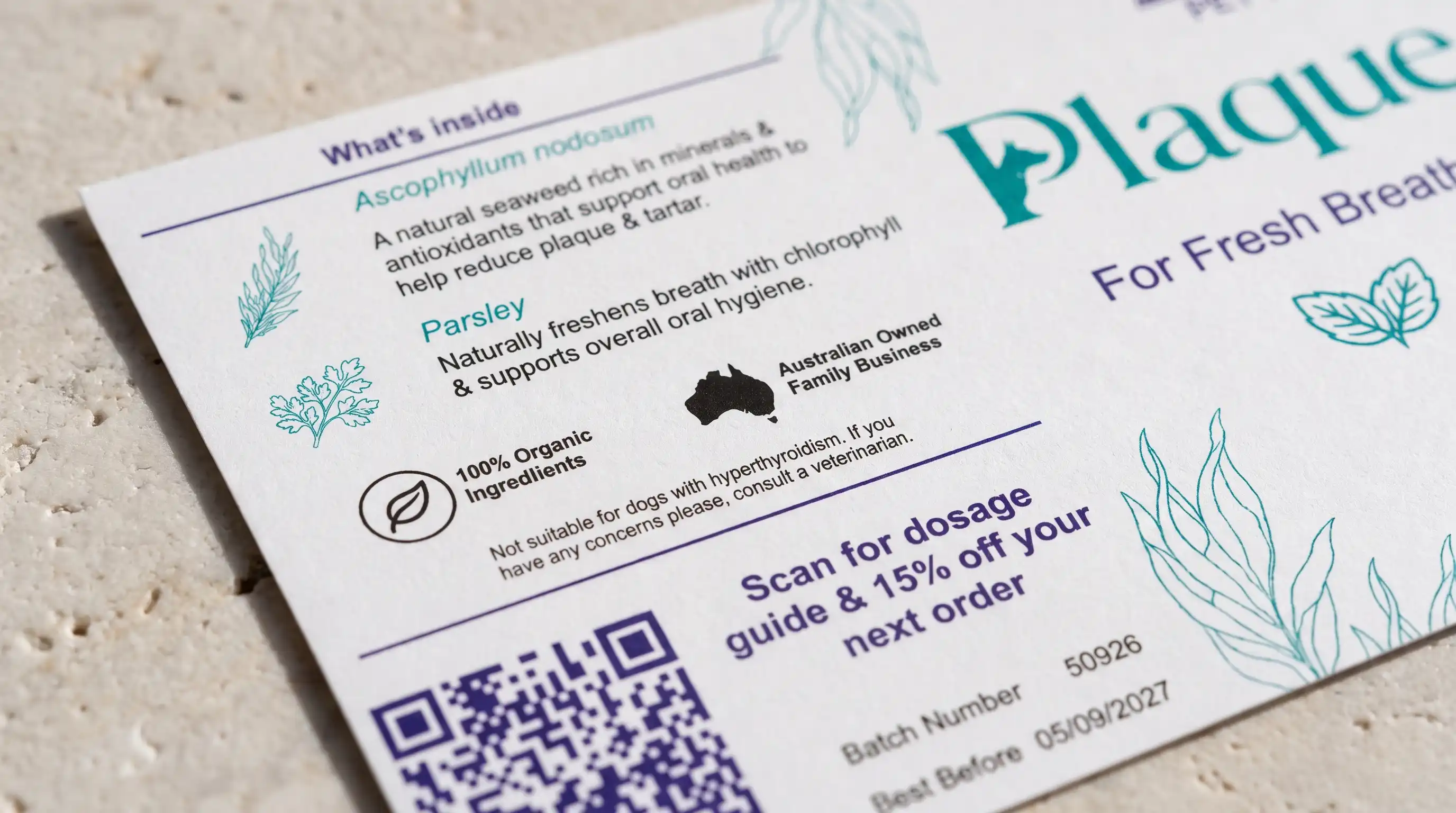
"Not suitable for dogs with hyperthyroidism. If you have any concerns please, consult a veterinarian."
For a responsible dog owner, reading this warning immediately raises alarming questions:
- "Does this mean seaweed is dangerous for my dog?"
- "Will giving this product to my healthy dog cause a thyroid disease?"
- "My dog takes thyroid medication—is this going to interfere with their treatment?"
Unfortunately, most supplement brands stop at the mandatory legal sentence. They do not explain why the warning exists, leaving owners to guess between internet fear-mongering and unhelpful corporate silence.
1. The Regulatory Safeguard Demystified
To understand the warning label, it helps to understand international pet food regulations. Regulatory bodies such as the European Pet Food Industry Federation (FEDIAF), the European Feed Ingredients Association (FEFANA), and the Association of American Feed Control Officials (AAFCO) establish strict guidelines for feed additives and botanicals.
Because marine brown algae (specifically species like Ascophyllum nodosum) naturally concentrate trace minerals from seawater, organic iodine is intrinsically present in the plant matrix. To learn more about iodine calculations, explore our evidence-based iodine safety guide.
Regulators mandate a caution label on iodine-dense ingredients for one simple reason: transparency and patient safety. When an ingredient delivers a concentrated essential nutrient, dogs with active medical conditions involving that nutrient must have their intake reviewed by a medical professional.
Legal and regulatory teams mandate standardized disclaimer language across all packaging to cover broad usage contexts—including uncalibrated over-feeding or specialized medical diets. The warning is not a verdict that the product is toxic. It is a responsible guardrail designed to ensure that medically managed dogs receive individualized veterinary oversight.
By establishing clear label boundaries, regulatory agencies protect vulnerable animal populations while allowing healthy animals to benefit from natural botanical ingredients under proper feeding directions.
2. What the Caution Statement Means — and What It Does Not Mean
When evaluating product disclaimers, pet parents deserve clear distinctions between different safety categories:
What It DOES NOT Mean: "Seaweed Causes Thyroid Disease in Healthy Dogs"
There is zero veterinary evidence suggesting that a measured, weight-appropriate daily serving of organic Ascophyllum nodosum causes thyroid disease in healthy dogs. Healthy canine physiology includes robust homeostatic mechanisms (pituitary TSH feedback loops) that safely process dietary iodine within established FEDIAF safety limits.
What It DOES NOT Mean: "A Secret Hazard Is Being Hidden"
Some pet owners assume the disclaimer implies the product is inherently unsafe. On the contrary, placing a transparent warning on the label demonstrates that a manufacturer respects veterinary boundaries and regulatory compliance.
What It DOES Mean: "Managed Medical Patients Need Individual Oversight"
If a dog has a diagnosed thyroid condition or early warning signs (such as hypothyroidism) or is actively taking prescription hormone medication (such as levothyroxine), its thyroid system is being medically controlled.
Introducing new sources of iodine can alter total daily intake, which could influence routine blood test monitoring. Therefore, the treating vet should review the product first to ensure monitoring protocols remain consistent.
3. Healthy Dogs vs. Medically Managed Dogs: A Clear Distinction
How a dog's body responds to dietary iodine depends entirely on its baseline endocrine health:
Intact Auto-Regulation
In dogs with normal thyroid function, the pituitary gland monitors circulating T4 levels and adjusts Thyroid Stimulating Hormone (TSH) output automatically. When fed a recommended, weight-calibrated serving of Ascophyllum nodosum, healthy dogs maintain stable hormone balance without disruption.
Exogenous Hormone Monitoring
Dogs receiving daily prescription levothyroxine rely on precise pharmaceutical dosing to regulate metabolism. Vets schedule periodic blood testing (drawn 4 to 6 hours post-pill) to verify therapeutic blood levels. Because additional dietary iodine is a variable in thyroid metabolism, veterinarians prefer to keep dietary inputs consistent during monitoring periods.
4. The Empowered Vet Conversation: What Information to Provide
Instead of fearing the label warning, use it as an opportunity for an informed, productive conversation with your veterinarian. Vets appreciate owners who bring clear, verifiable product data rather than vague internet claims.
When discussing a seaweed dental supplement with your vet, bring the following 4 details:
1. Exact Product Name & Ingredient List
Show the product label confirming 100% organic Ascophyllum nodosum and companion botanicals, backed by our seaweed safety guidelines.
2. Daily Serving Gram Weight for Your Dog's Size
Provide the exact scoop size (e.g. 0.430g daily for a 10kg dog) so your vet knows the precise daily botanical mass.
3. Measured Iodine Exposure Information
Share batch Certificate of Analysis (COA) data confirming measured microgram iodine content per daily scoop.
4. Your Dog's Current Complete Diet & Medications
List all main kibble/canned foods, treats, and prescription drugs (such as levothyroxine) currently being administered.
Veterinary Result: Armed with exact numbers, your veterinarian can quickly evaluate whether the microgram iodine content fits seamlessly into your dog's overall care plan, ensuring peace of mind for you and safety for your pet.
5. Practical Summary Decision Guide for Dog Owners
Use this calm, 3-step decision framework when evaluating seaweed dental products:
Scenario A: Your Dog Has No Diagnosed Thyroid Condition
Follow the standard label directions according to your dog's body weight band. Do not worry about the caution label or invent a thyroid problem from ordinary tiredness. Use measured daily scoops and maintain routine oral hygiene.
Scenario B: Your Dog Takes Prescription Levothyroxine
Do not start a new seaweed supplement on assumptions. Bring the product label, daily scoop weight, and measured iodine information to your next vet appointment. Follow your vet's direct guidance regarding dietary consistency.
Scenario C: Your Dog Shows Unexplained Metabolic Symptoms
If your dog has unexplained weight gain, lethargy, or coat thinning, book a professional veterinary exam and blood panel. Do not start or stop dietary supplements as a self-diagnosis test.
Explore the Canine Thyroid & Safety Guide Library
Learn more about how dietary ingredients, iodine levels, and veterinary advice intersect:
Dog Thyroid Symptoms Checker: Free Vet Visit Report
Record changes in your dog's weight, energy, coat, and behavior into a structured summary report for your vet visit.
LANE A: PILLAR GUIDESymptoms of a Dog with Thyroid Problems
Understanding hypothyroidism vs hyperthyroidism, clinical signs, and how vets diagnose thyroid disease.
LANE C: IODINE SAFETYAscophyllum Nodosum, Iodine and Dogs: Safety Guide
Understanding organic iodine, dietary requirements, FEDIAF safe upper limits, and serving math.