

Dog Dental Powder vs Dental Chews: Which Fits Your Routine?
Dental powders and chews are different formats. The useful choice depends on your dog, your routine and clear expectations about what a daily product can and cannot do. We compare how each fits a daily routine, what to check and why neither replaces veterinary care.
TL;DR: Powder or dental chews?
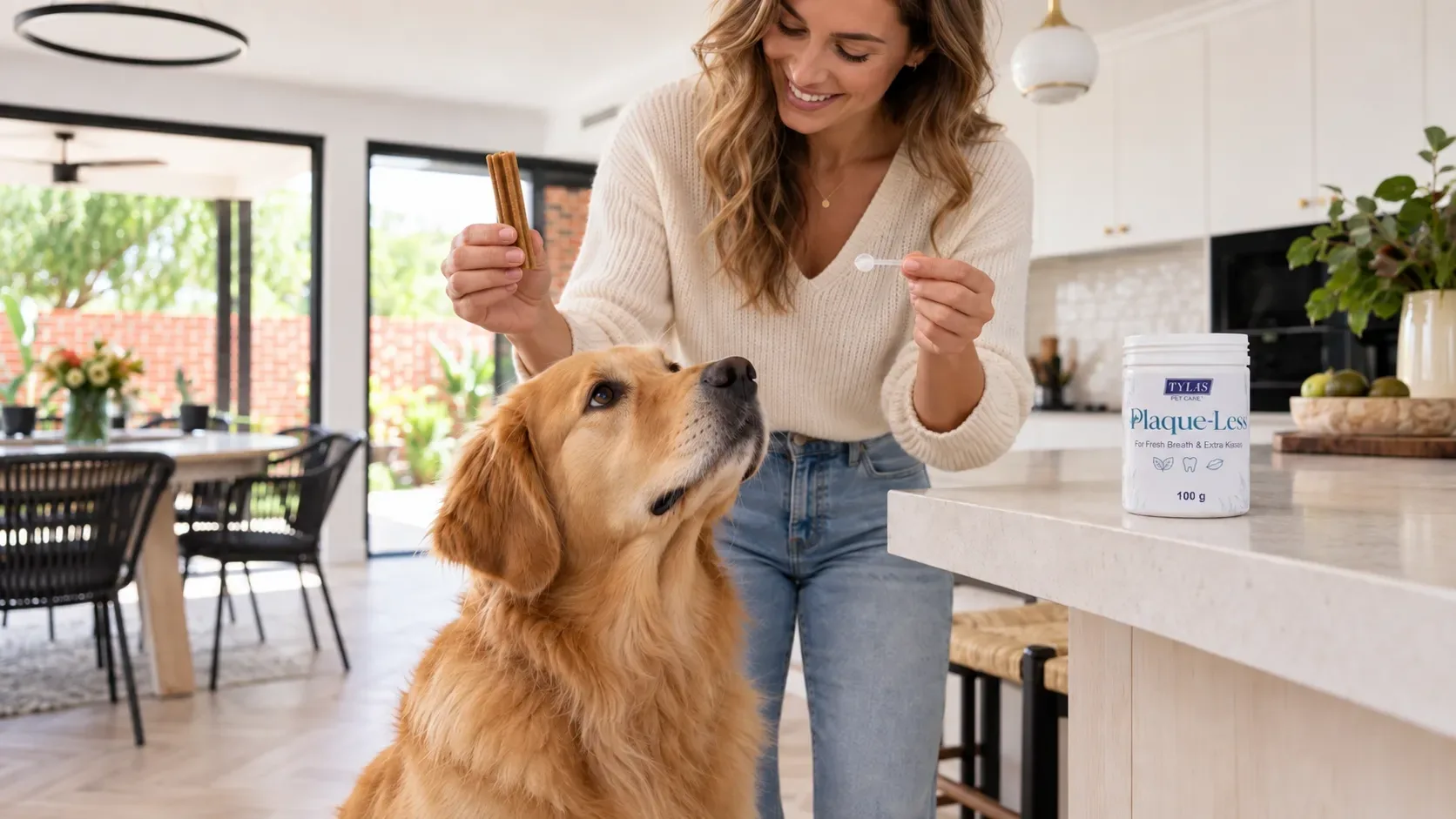
If your dog actually chews, dental chews can make sense. If they inhale a chew in 10 seconds, refuse brushing, or you want something you can add to dinner each day, dental powder is usually the easier routine.
- • Choose dental powder if you want a simple once-a-day option added to food, or your dog tends to swallow chews quickly.
- • Choose dental chews if your dog genuinely spends time gnawing them rather than crunching and swallowing them almost immediately.
- • Compare the cost before deciding. Dog size can make a surprisingly large difference to the daily and yearly cost of both options.
We built a calculator comparing 12 popular dental powders and chews across different dog sizes, so you can see what each option actually costs your dog per day and per year.
Use the calculator below, then we’ll break down the differences that actually matter.
Finding the right no-brush option for your dog means understanding their chewing habits and your own daily schedule. Let's look at how each format works in reality.

How dental powder fits a routine
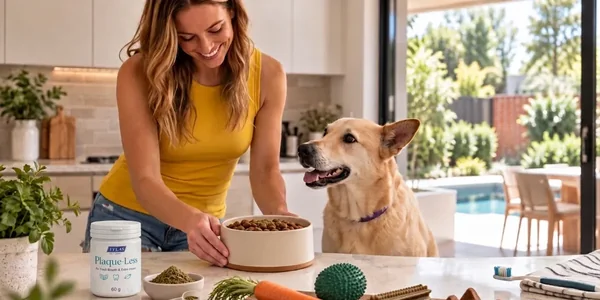
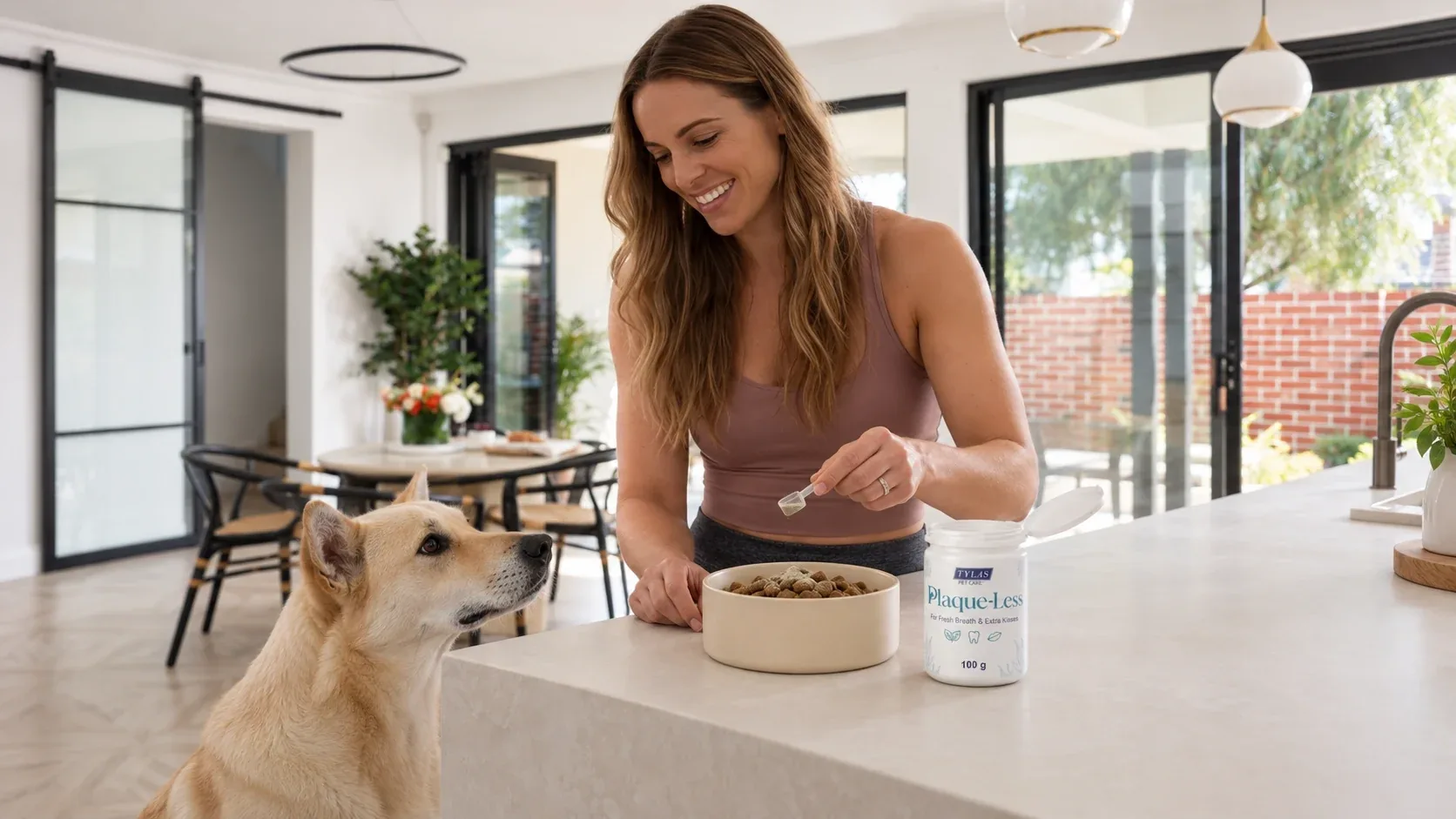
Dog dental powder is designed to be sprinkled onto or mixed into a dog's daily meal. A daily oral hygiene support powder like Tylas Plaque-Less is a straightforward food topper. It requires no extra time during your morning rush.
Because the powder mixes into their normal food, there is no extra treat negotiation. This is especially helpful for fussy eaters or dogs who stubbornly resist having their mouths handled. You just measure the daily amount based on their weight and stir it in. It is low in calories, making it a sustainable daily habit even for dogs on strict weight-management plans. For many owners, a powder versus water additives comparison (which you can read here) shows powder wins out simply because dogs won't reject their water bowl.
How dental chews fit a routine
Dental chews rely on mechanical friction. The idea is that as the dog gnaws, the chew rubs against the teeth, helping to wipe away soft plaque. For dogs that take their time and chew carefully on both sides of their mouth, this can be an effective part of their routine.
However, many dogs treat dental chews as high-value snacks. They gulp them down in a few seconds, completely bypassing the friction process. Additionally, dental chews add calories. If you are giving a chew every day, you need to subtract those calories from their main meals to prevent weight gain. They also present a choking risk for dogs that don't chew properly.
A practical comparison
Here is a straightforward look at how dog dental powder vs dental chews compare in everyday use.
| Feature | Dental Powder (Food Topper) | Dental Chews |
|---|---|---|
| How used | Mixed into daily food | Given as a separate treat |
| Control of serving | Precise scoop based on weight | Fixed size, often high calorie |
| Routine fit | Seamless with mealtime | Requires dedicated treat time |
| Key limitation | Takes time to support hygiene | Often swallowed too fast to work |
What neither format can replace
It is crucial to understand that daily products are for maintenance, not medical treatment. Neither dental powder nor dental chews can remove hard tartar, cure existing dental disease, or replace regular veterinary care.
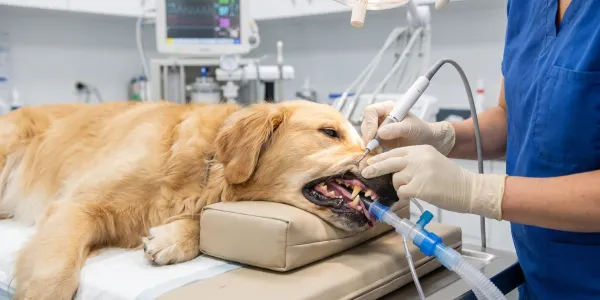
If your dog has bad breath, visible brown build-up, or red gums, they need a professional assessment. Dental powder is a daily oral hygiene support powder, best used on clean teeth or mild plaque to maintain a healthy mouth, but it cannot substitute for a vet clean under general anaesthesia.
FAQs
Are chews or powder better?
The best option is the one you can stick to. Powders are often more practical for busy households and dogs that eat treats too fast, as they integrate directly into mealtime and provide consistent daily support without adding excess calories.
Can I use both?
Yes. Many pet owners use a daily dental powder on food as their baseline routine and occasionally offer a chew for mental stimulation.
Can either remove tartar?
No. Once plaque hardens into tartar (calculus), it requires professional veterinary scaling to remove safely. Home products are for managing soft plaque.
What if my dog cannot chew treats?
For senior dogs or those with dental issues that make chewing painful, a soft diet mixed with a dental powder is much gentler and safer than hard chews.
See Plaque-Less
Support your dog's daily oral hygiene with a simple food topper. No wrestling, no changed water, just a quick scoop on their breakfast.
Related Articles
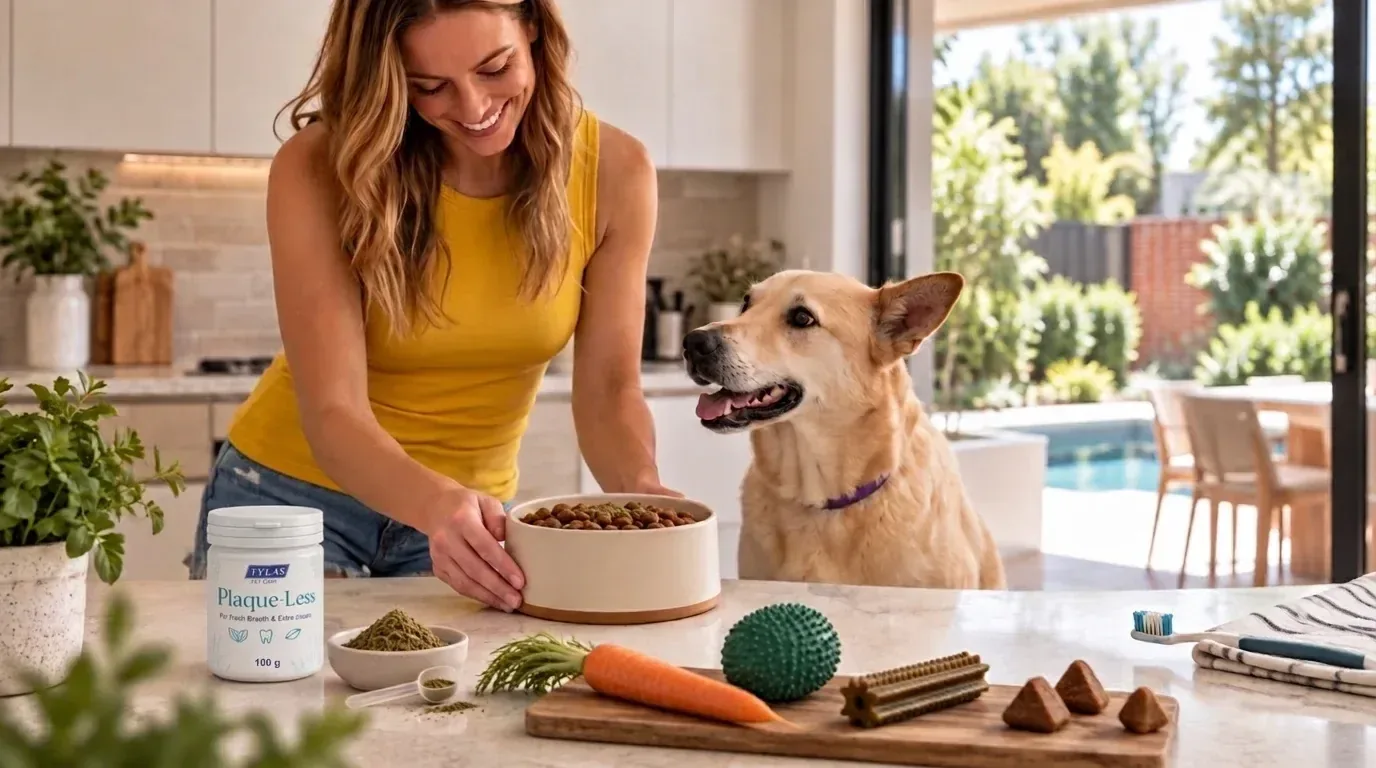
How to Clean Dog Teeth Without Brushing
Discover simple ways to maintain your dog's oral hygiene without the stress of brushing.

Dental Powder vs Water Additives
Compare food toppers vs chemical water additives across taste, hydration risk, and daily compliance.
Choosing a Dog Dental Powder in Australia
A buyer's guide to selecting the right daily dental powder for your dog.